Year 1Deep Value-Add · Acquired Mid-2025
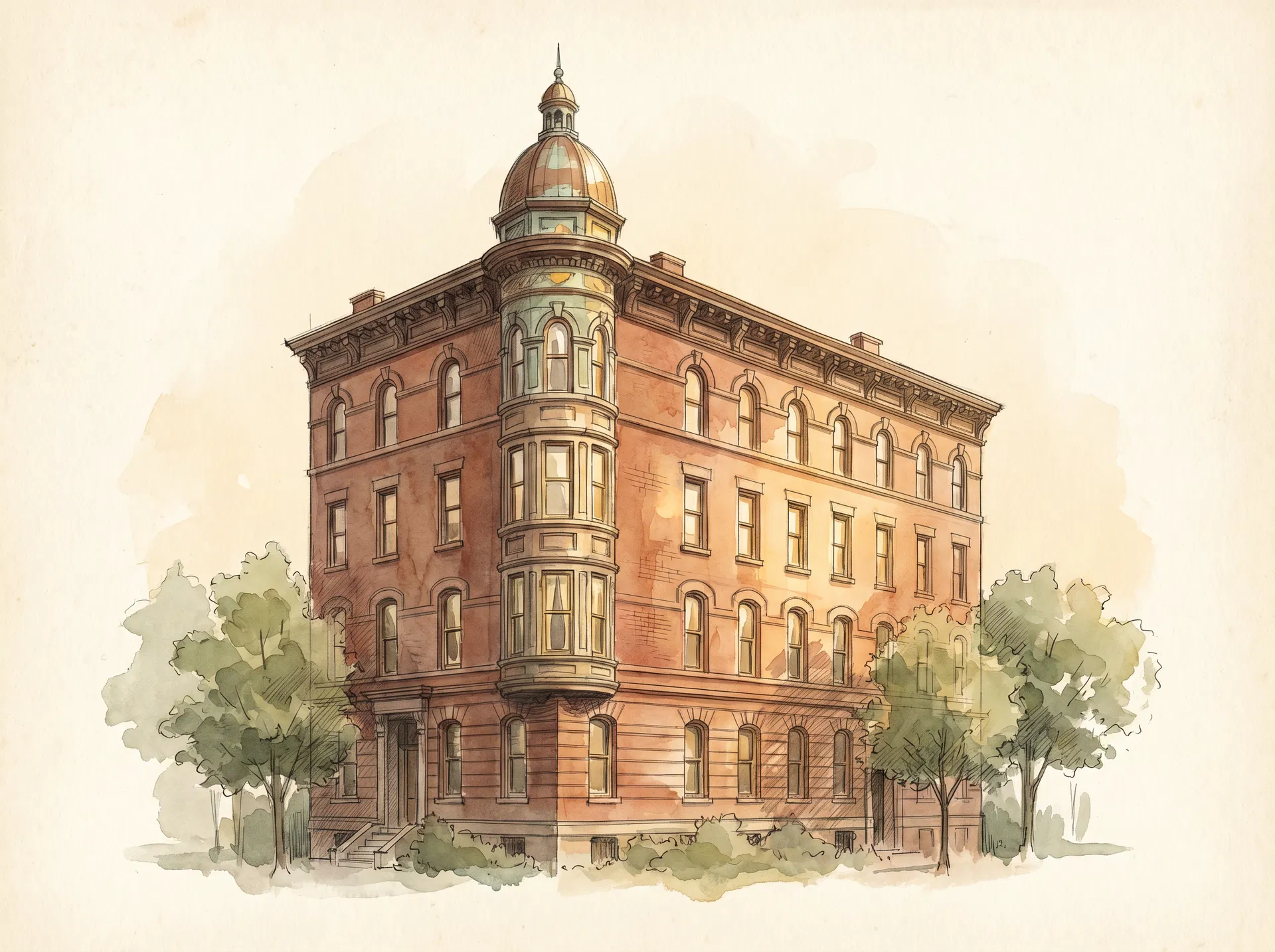
Cleveland & East Cleveland Portfolio
449 units across 10 properties at ~$28K/door. In active rehab and lease-up.
A quiet-authority briefing for accredited investors, professionals, and retirees who suspect that the traditional 60/40 portfolio is no longer doing its job. Eighteen years of investing. Fourteen years operating multifamily. A private capital book with a 100% repayment rate.
Before any pitch, this memo addresses the four questions every honest reader is already asking: Who is this person? Why should I listen to them over my financial advisor? What is the catch? And what happens if it goes wrong?
You have watched two decades of bull-market noise dressed up as financial expertise. You have watched inflation quietly clip 20% from the purchasing power of your "safe" cash position. You have watched a 60/40 portfolio that was supposed to protect you in 2022 lose value on both sides at once. The fatigue is rational. So is the skepticism.
This document is not a pitch. It is a thesis. By the end of it, you will either agree with the diagnosis, or you will not — and either answer is a useful one.
Lazy equity is the wealth that is technically yours but is producing nothing for you. It is the $500,000 of paid-down home equity earning a theoretical 0%. It is the IRA position whose dividend is reinvested into the same fund that has not outperformed inflation. It is the operating cash sitting in a 4.5% money market while the dollar loses 6% of its real value.
Traditional financial advice teaches accumulation. It rewards you for trapping wealth inside an appreciating asset. It rarely teaches you to deploy that trapped wealth into a cash-flowing instrument. That is the gap this memo intends to close.
Most investors track the wrong number. ROI is a memorial — it tells you what your original cash earned. ROE is a verdict — it tells you what your current equity is earning today.
Equity locked in a paid-down home. Theoretical appreciation only. No monthly income.
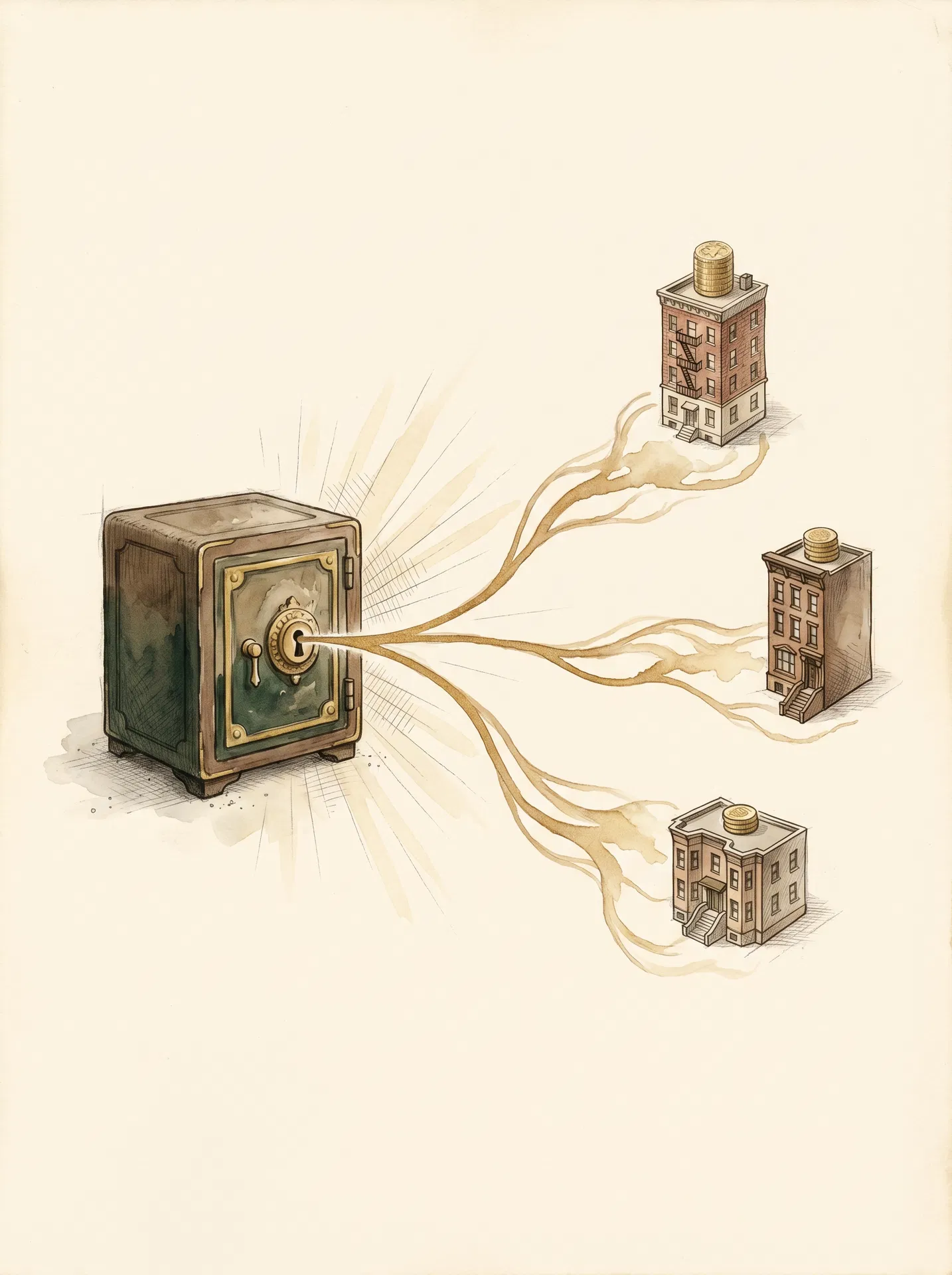
Same equity, deployed as a second-position note at 8% APR against stabilized multifamily.
Same dollars. Same risk profile (collateralized). One is a memorial, one is a paycheck.
Roughly half of all small-to-mid multifamily in America is owned by operators over the age of sixty. Many bought at 1980s-and-1990s basis, deferred capital improvements for two decades, and now face a stark choice: fund a renovation cycle they no longer have the energy for, or sell at a meaningful discount to a younger operator with capital and operational systems.
This is not a fund. There is no committee, no anonymous general partner, no layered management between you and the operator of your collateral. Eighteen years investing since 2008. Fourteen years operating multifamily since 2012.
Personal guarantor on every promissory note. The same name appears on the acquisition deed, the senior loan, the second-position note, and the guarantee.
Real estate investor since 2016; previously exited a duplex/triplex portfolio generating $1M+ net profit. Co-owner on Jackson, MS multifamily — her personal wealth is invested in the same assets that secure your note.
Specific deal partners are introduced privately during diligence. Their identities and roles are documented in writing before any note is funded.
For context: the sponsor's existing private lender book is concentrated at 12% (a majority of active loans) and 15% (the next-largest tranche). An 8% APR offering is materially below the sponsor's own historical cost of capital.
The strategy is consistent across every asset: acquire at 25–33% occupancy, fund the renovation, stabilize over 24–36 months, then refinance or harvest.
449 units across 10 properties at ~$28K/door. In active rehab and lease-up.
Stabilization plans funded; occupancy moving from sub-30% toward stabilized targets.
Lease-up complete; stabilization revenue ramping into 2026.
Long-held asset producing surplus liquidity — the case study in the next chapter.
This is the cleanest possible illustration of why the math behind the offering works. The sponsor does not only borrow at 8–12%; the sponsor lends at 12% from the surplus cash flow of a stabilized asset. Nothing in this memo asks you to do anything the sponsor has not already done with their own capital.
All 655 units are operated exclusively through AppFolio — the same institutional-grade property management platform used by REITs and large private operators. Every dollar of rent is collected, recorded, and reconciled inside one ledger. There is no shadow-accounting, no founder spreadsheet kept on a personal laptop, no "we'll send you the report next month."
CLTV capped at 80% — meaningful equity sits behind the second lien before any principal is at risk.
AppFolio reserves are funded monthly across the portfolio; surplus liquidity from stabilized assets backstops the note program.
The portfolio is acquired at a 50%+ discount to ARV, leaving a substantial value-creation cushion before the second lien is impaired.
Sole sponsor model means single point of accountability — but also $14.7M of personal net worth standing behind a personal guarantee.
No real estate investment is risk-free. Past performance does not guarantee future results. Every investor should review the offering documents and consult their own legal, tax, and financial advisors before participating.
Thirty private minutes by phone or video. The Steward calendar opens directly in the panel beside this card. If your browser blocks the embed, the link button below opens it in a new tab.
Thirty minutes by phone or video. Your questions, my answers, no slide deck.
Send my SREO, FICO, lender tracker (anonymized), and the specific property securing your proposed note.
Securities counsel issues the promissory note, deed of trust, and personal guarantee. ACH wire on close.
Monthly ACH on the contractual due date. Quarterly statements thereafter.